Last year, Graf presented herself to the Sarajevo audience with her exhibition "Sacred and Profane" at the Bosnian Cultural Center. In it, she explored the contrasts between the sacred and the profane in southern India, bringing intimate visual records of rituals, the daily lives of workers, and the transience of deities following festivals.
This time, the audience had the opportunity to hear about Graf's passion for analogue technique. In a digital world where various modifications to photographs are possible, she chooses the analogue method, which is much more complicated, yet the process itself is more engaging.
"Art is what you create in the moment when you are exclusively behind the camera," she says.
Graf pointed out that through photography, she seeks to interpret the world. Emphasizing that she has never felt truly Austrian, she explained that art and travel are her ways of seeking answers to the questions of who she is and where she is going.
Although a supporter of analogue and firm in her stance that she is not interested in technique, but exclusively in photography, Graf is optimistic regarding the global technological revolution. Traveling through India—which she also considers her home—from 1994 to the present, she has witnessed positive changes in the country: the arrival of electricity, industrialization, and many positive processes that have created a middle class there. Furthermore, she emphasizes that thanks to technology, it is the end of the world as we have known it, and that we must all join forces to create a new, shared world, unburdened by borders and differences.
Renate Graf noted that she also feels at home in Sarajevo, as it is a city where East and West meet, along with four religions and many cultures, thus reminding her of India.
"I am fascinated by the resilience of the women and men of Sarajevo against all the catastrophes they have survived in the past," she says.
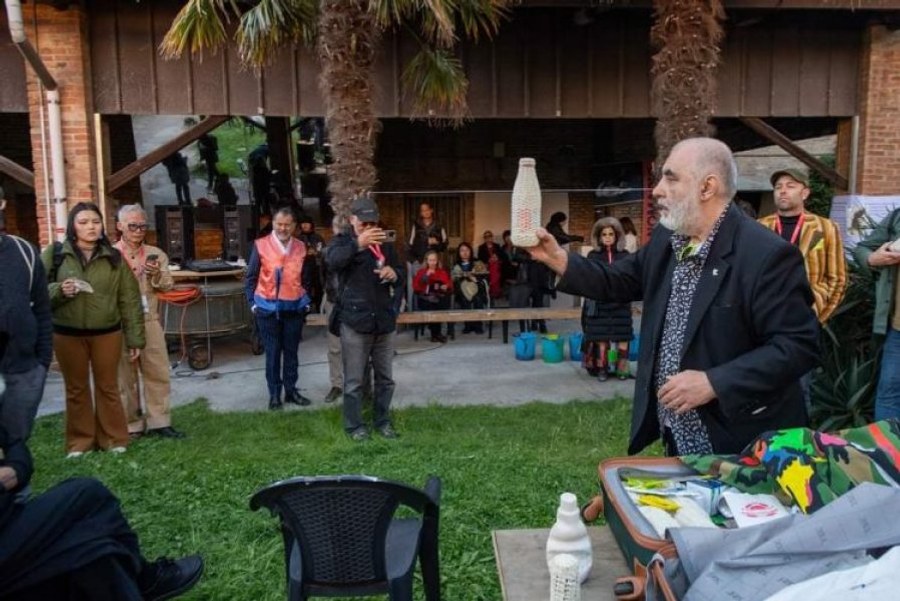
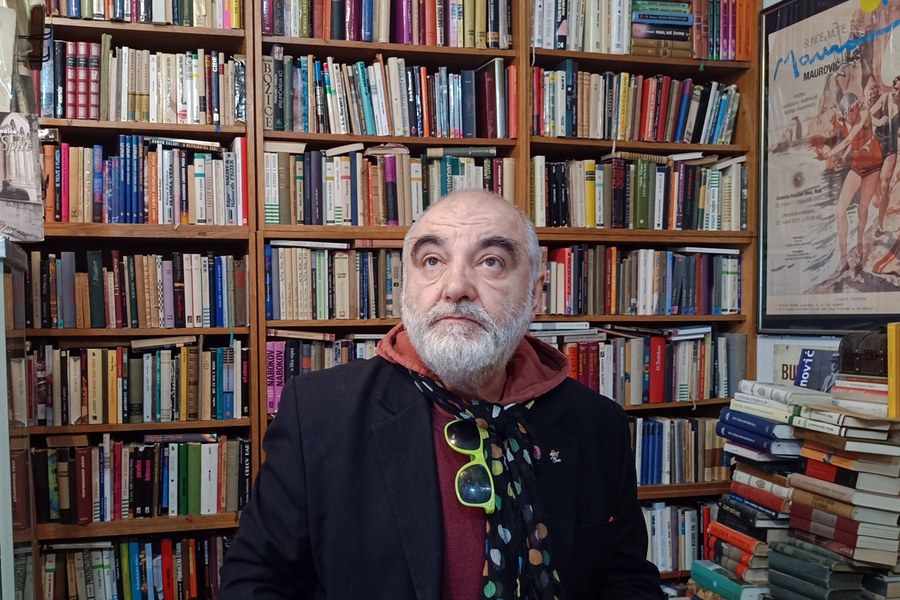
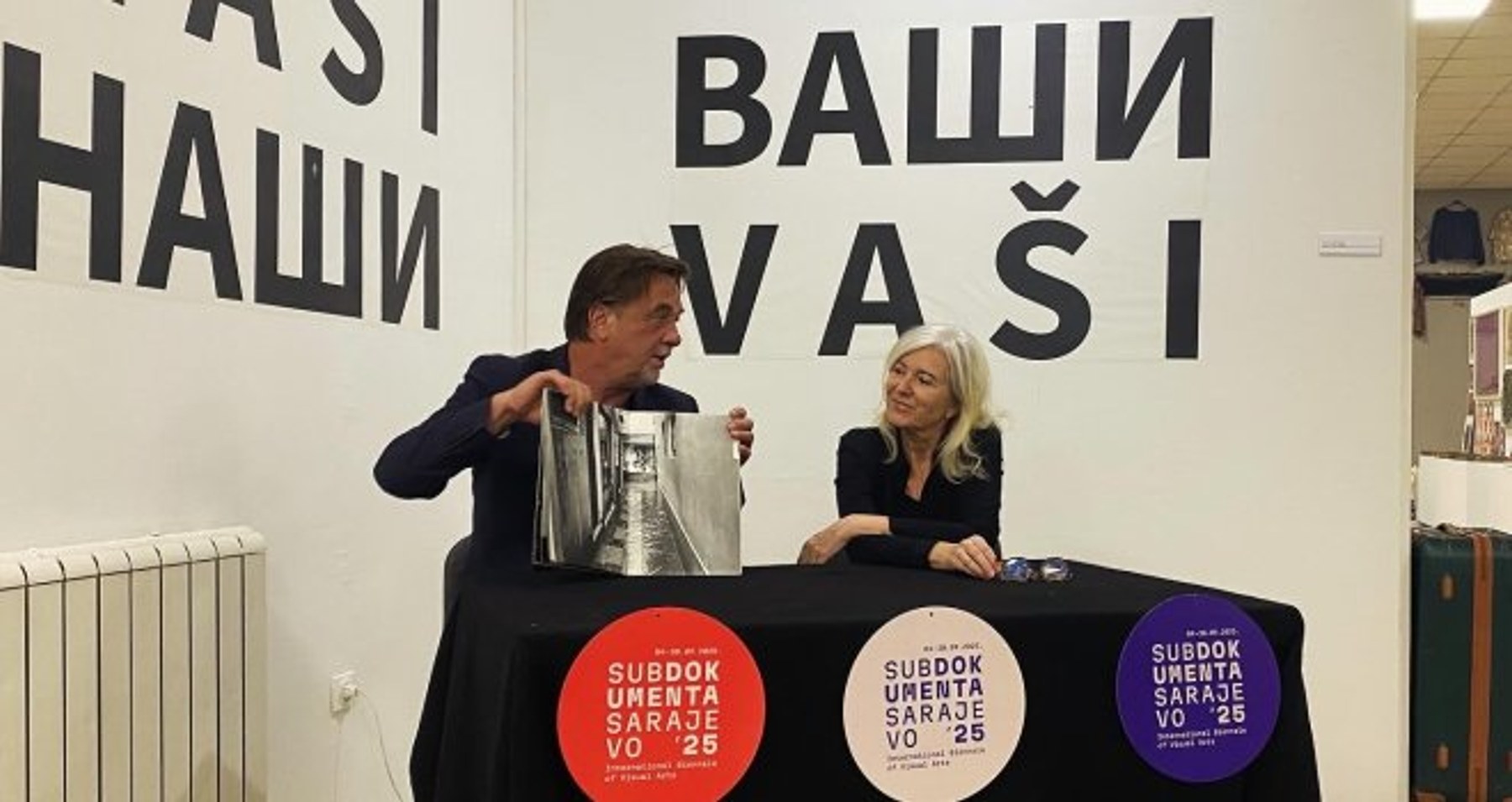
Jasmin Duraković also raised important questions regarding the role of the artist in the world we live in and the fact that today, many artists are becoming producers strictly controlled by capital. In such cases, instead of being a response to social, political, and cultural processes, art merely serves as an extension of those narratives. However, the International Biennial of Visual Arts "SubDocumenta Sarajevo '25" has shown how major projects can be realized outside of those systems and without international donors, relying solely on enthusiasm and the personal connections of Jusuf Hadžifejzović, and everyone else involved in the project. The Biennial is proof that art can remain independent, and therefore the selection of artists and works remains relevant and critical of the reality we live in.
Graf concluded on an optimistic note, despite having witnessed the war in Gaza and many other conflicts, violence, political pressure, and poverty as an artist—all of which she has documented through her "light-writing" (photography). She message was that an artist's mission is to be like a phoenix: when everything collapses, they create a document and a work of art, giving everything a new value.
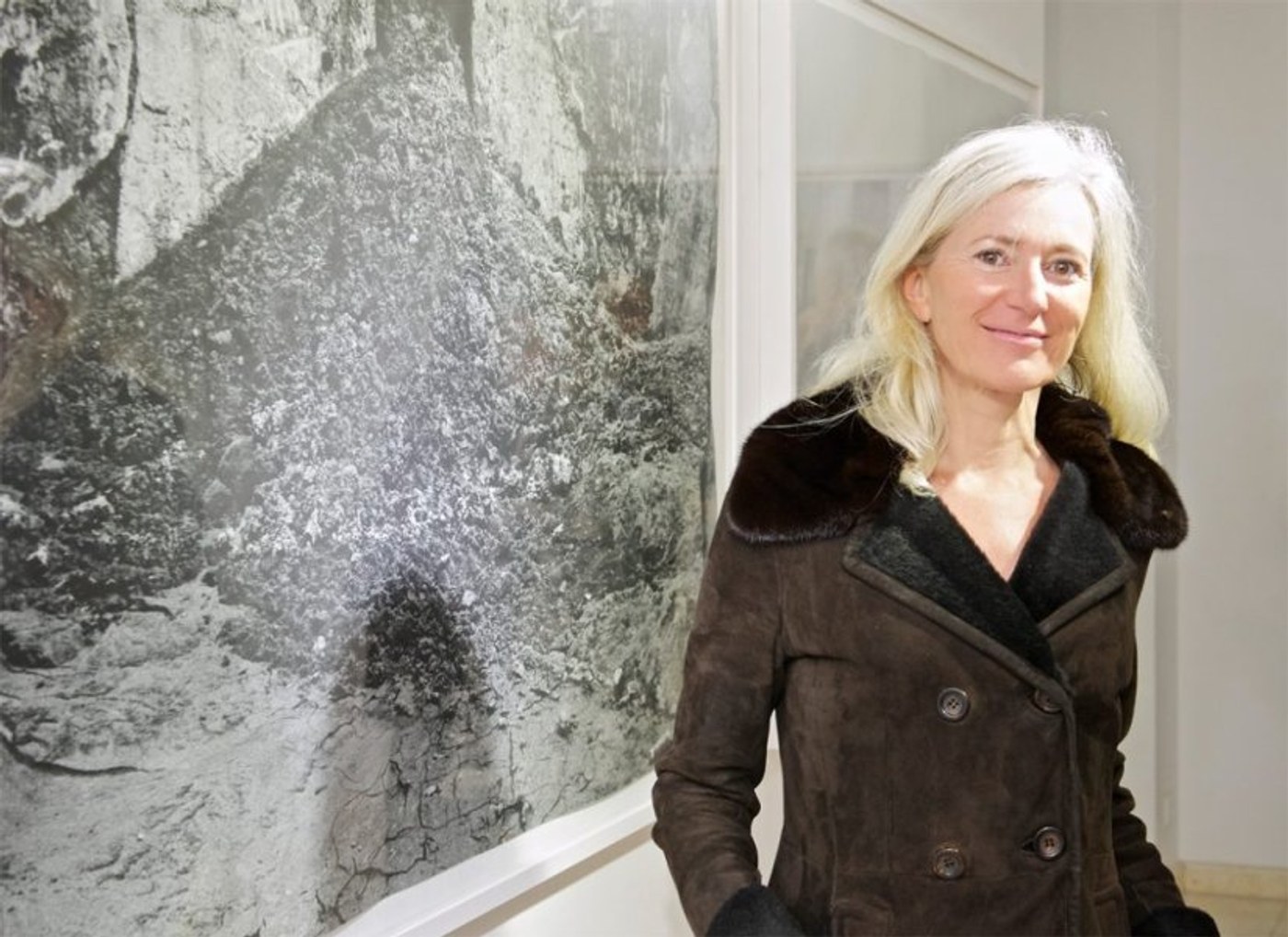
Renate Graf is renowned for her work in analogue techniques, black-and-white photography, and traditional darkroom developing processes. Her photographic journey began in 1993 with an expedition along the Silk Road alongside artist Anselm Kiefer. Over the past decades, she has traveled through China, Uzbekistan, Pakistan, Nepal, and especially India, whose landscapes, rituals, festivals, and daily life profoundly shape her body of work.
The uniqueness of her work lies in the fusion of photography and text, ranging from travel notes with handwritten quotes to large, hand-bound books that become works of art in their own right. The artist herself emphasizes that she is not a "photographer in the classical sense of the word," as her photographs do not merely define, but rather bear witness and carry a deeper purpose.
Through her aesthetic, Renate Graf brings the focus back to the process, the analogue approach, and intimate witnessing, offering the audience an experience of timelessness in an era dominated by digital photography.
2025 – Centro Eco Cultural Sueli Pontes, Rio de Janeiro
2025 – Terra Fracturata, MAB, Muzej umjetnosti, Brazilija, Brazil
2025 – Potpisivanje knjige: „Tako dug boravak u Francuskoj“, Galerie du Passage
2024/2025 – Jodhpur, „Jodhpur u crnom i bijelom, Šetnja kroz grad opasan zidinama“, JDH, Walled City Project
2024/2025 – Crux galerija, Atina, „Nažalost, to je raj“
2024 – „Dokazi percepcije“, Meksiko Siti, Pablo Goebles Fine Art
2024 – Bosanski kulturni centar, Sarajevo, „Sveto i profano“
2024 – „Fotografija mi je promijenila život“, grupna izložba, Crux galerija, Atina
2024 – Crux galerija na Spark Artfair-u,
2024 – „Zahvalnost bogovima“, Mosteiro de Santo André, Ancede, Baião, Portugal
2023 – Art Athina, Crux galerija, Atina
2023 – Crux galerija, Atina, „Bestijarij Cruxa: Artefakti, Alegorije, Reprezentacije“
2022 – Terra Fracturata, MAC, Rio de Janeiro, Niterói
2022 – Grande Mestres, Mosteiro de Santo André, Ancede, Baião, Portugal
2022 – „Putovanja duž Puta svile 1993–2021“, izložbeni projekti na tri lokacije u Istanbulu: Austrijski kulturni institut, Francuski institut, MUSE Contemporary
2022 – „Ponovno putovanje kroz vrijeme i rute Puta svile“, CER Modern, Ankara, Turska
2022 – „Čast i umjetnost na Este“, poziv kolekcije Reginart, Punta del Este, Urugvaj
2021 – Renate Graf: „Sveti pejzaži“, Slag galerija, Njujork, SAD
2021 – „Ponovno putujući vremenom i rutama Puta svile“, Kuća fotografije, Taškent, Uzbekistan
2019/2020 – „Hronike fotografa: Misli postaju slike“, Palacio Angiós, Majorca, Portugal
2019 – „Tragovi u pijesku“, Garage 229, Štutgart, Njemačka
2018 – „Tišina u planinama“, Muzej Zijan, Changsha, Kina
2018 – „Putopis: Put kroz slikovite tragove“, Casal Solleric, Palma de Mallorca, Španija
2017 – Galerie Michael Schultz, Berlin
2017 – „Putopis“, David Nolan Gallery, Njujork, SAD
2015 – „Duge ekspedicije, nove knjige“, Galerie du Passage, Pariz, Francuska
2013 – Prezentacija knjige „Dnevnik 1992–2012“, Galerie Thaddaeus Ropac, Salzburg, Austrija
2013 – Prezentacija knjige „Dnevnik 1992–2012“ i pjesničko čitanje, Gallery Anthony d’Offay i Hannah Barry Gallery, London, UK
2013 – Prezentacija knjige „Dnevnik 1992–2012“, David Nolan Gallery, Njujork, SAD
2013 – Prezentacija knjige „Dnevnik 1992–2012“, Pierre Passebon, Galerie du Passage, Pariz, Francuska
2011 – Fotografije za scenografiju opere „Orlando Furioso“ Antonija Vivaldija – režija Pierre Audi i Patrick Kinmonth, Théâtre des Champs-Élysées, Pariz, Francuska
Written by: Vanja ŠUNJIĆ